A GVM canopy setup can look straightforward on paper, but run short of payload once the ute is packed. The tray or canopy is only the starting point. Drawers, batteries, water, roof gear, spare wheels, tools, passengers and towball download all count toward the final load.
Getting the weight plan right early helps the finished vehicle handle properly and leaves useful capacity for the gear, people and supplies it was built to carry.
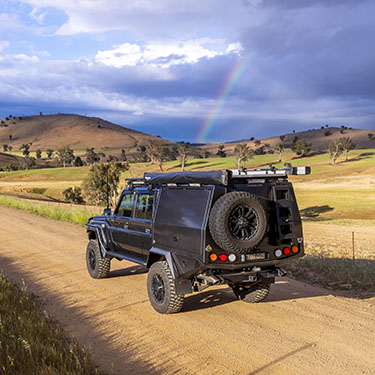
A brochure payload figure can feel generous until the fixed accessories are counted. A tray, canopy, bull bar, towbar, larger tyres and underbody protection may already be on the vehicle before work equipment or touring gear goes in.
Those permanent choices shape the rest of the fit-out. A heavier base can force smaller water tanks, fewer batteries or less storage later in the build.
A touring vehicle, trade ute and mixed-use build carry weight in different ways. Start with the exact variant, cab type, towing plans and the equipment that travels every week. That gives Trig Point a clear starting point for recommending a canopy, tray and storage layout that suits the vehicle’s real workload.
Gross vehicle mass, or GVM, is the maximum permitted mass of the loaded vehicle. It includes the vehicle, fitted accessories, fuel, occupants, cargo and towball download when a trailer is connected.
Use the GVM that legally applies to the vehicle. This may be the original manufacturer rating or an
approved revised rating recorded through a compliant modification process.
Tare and kerb mass are useful starting figures, though manufacturer definitions and fuel allowances can differ. Once accessories are fitted, a measured figure gives you a firmer basis for planning.
Weigh the ute in its current condition and record the fuel level and permanent accessories. Ask for separate front and rear axle figures as well as the total mass where the weighing service allows it.
Remaining payload is the capacity between the vehicle’s current measured mass and its applicable GVM. A ute with a 3,200kg GVM and a measured mass of 2,300kg has 900kg available at that point.
That 900kg must cover the tray or canopy, storage, water, electrical equipment, people, food, tools and travel gear. A useful canopy weight guide separates the base product weight from the completed vehicle load.
The vehicle also has front and rear axle limits. A ute can sit below GVM and exceed its rear axle rating when too much mass is carried behind the axle.
Owners who tow also need to check gross combination mass, towing capacity, towbar rating and towball download. The download forms part of the vehicle load and often places more demand on the rear axle.
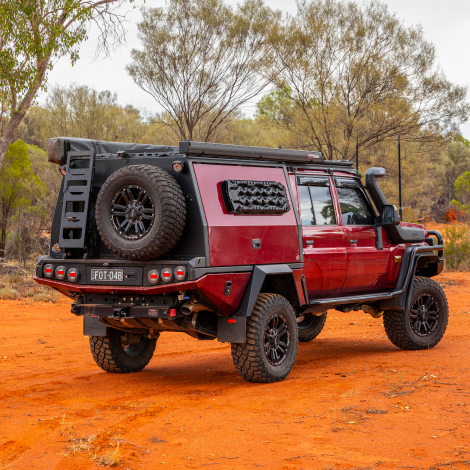
A chassis-mount canopy attaches directly to the chassis, so the build doesn’t carry a separate tray underneath. Trig Point uses aluminium and steel monocoque construction to reduce internal framing and create a low, flush floor.
This format suits owners who want a permanent enclosed body for touring, trade storage or a combination of both.
A tray-and-canopy setup gives the ute open tray capability and the option to use a shorter canopy. The payload calculation needs to include both components. Trig Point Horizon tray-mount canopies pair with Horizon Trays through the Track side mounting system, creating a flush floor and supporting the canopy along the tray sides. This format makes sense when open tray space, removable sides or changing loads are part of the vehicle’s normal week.
The quoted tray and canopy weight is easy to spot. The smaller additions often use the remaining margin.
A 70L water tank carries about 70kg of water when full, plus the tank, mounts, pump and plumbing. A battery system includes the battery, charger, inverter, cabling, enclosure and mounting hardware. Roof load includes the rooftop tent, crossbars, platform, awning, solar panels and anything stored above the canopy.
Rear carriers, spare wheels, ladders, fridges, drawers, recovery equipment, fuel, passengers and food complete the calculation.
The figures below show how a healthy starting payload can narrow once a touring fit-out is loaded. Please note that product weights and vehicle limits will vary.
| Item | Mass |
|---|---|
| Starting vehicle mass with full fuel and driver | 2,250kg |
| Applicable GVM | 3,200kg |
| Starting payload available | 950kg |
| Canopy or tray-and-canopy base system | 300kg |
| Drawers and shelving | 55kg |
| Battery and electrical system | 45kg |
| 70L water system, filled | 80kg |
| Fridge and food | 45kg |
| Rooftop tent, awning and solar | 90kg |
| Rear carrier, spare and recovery equipment | 70kg |
| Two additional passengers and luggage | 160kg |
| Total added load | 845kg |
| Remaining margin | 105kg |
The remaining 105kg can disappear with extra fuel, bikes, firewood, a larger toolbox or towball download. Finding that out during planning leaves room to change the layout.
Good weight distribution keeps the load within the vehicle’s total limit and both axle ratings. Separate axle figures show where the mass is sitting and can expose a rear-heavy build that looks acceptable on total weight alone.
Mass carried behind the rear axle creates leverage. Spare wheels, long drawers, rear fuel storage and heavy toolboxes can add substantial rear axle load and reduce weight over the front axle. Steering feel, braking balance, headlight aim and stability can change as a result.
Towball download adds another rearward load. Weigh the ute in its heaviest towing condition, with the trailer connected and the travel load in place. This gives a realistic picture of GVM, GCM and rear axle demand.
Roof equipment raises the vehicle’s centre of gravity, which affects cornering and travel across uneven ground.
Trig Point chassis-mount canopies have a 300kg dynamic roof load rating. Horizon tray-mount canopies have a 200kg dynamic rating. These are canopy structure ratings. Available payload, axle limits, tyre ratings, vehicle handling and the mounting system also shape the practical roof load.
Water, batteries, tools and recovery equipment are strong candidates for low, forward positions. Keep left-to-right loads reasonably even when a tank, battery or drawer bank sits on one side.
Plan around the heaviest on-road condition, including all occupants, full water, departure-day food and towball download where relevant.
The Horizon Tray has a removable headboard that lets a tray-mounted canopy sit further forward, supporting better weight distribution and preserving tray space behind it. Trig Point water tanks also mount beneath the canopy to keep water low and forward.

Record the applicable GVM, front and rear axle limits, GCM, towing capacity and towbar rating. Use the figures for the exact vehicle and any approved modifications.
Get the weight of the current ute, then add the exact tray or canopy weight and every permanent accessory. Include mounts, wiring, plumbing, drawers, batteries, tanks and rear carriers.
Add the people, full water, fuel, food, tools, roof equipment and towing load carried on the busiest workday or the first day of a trip. Leave a practical margin for items that change between journeys.
Once the fit-out is complete, the ute should be weighed with its real working or touring condition. Check the total mass and both axles.
A compliant 4WD GVM upgrade can increase the vehicle’s permitted gross mass. The approved figure, components, certification and registration process depend on the vehicle, upgrade pathway and state or territory requirements.
Trig Point can help plan the tray, canopy and accessory weights around your vehicle. Where a GVM upgrade is required, the approval and certification will need to follow the relevant state or territory process through an approved modifier, engineer or certifier.
A lower fixed build weight leaves more of the approved capacity available for useful load. That benefit remains after a GVM upgrade and gives the owner more room for changing work or travel needs.
A capable GVM canopy setup starts with real vehicle figures and a complete accessory list. Calculate the fixed structure, place heavy items low and forward, check both axle loads, then weigh the finished ute in its working or touring condition.
Let Trig Point plan a lighter, better-balanced setup around your vehicle, payload and towing needs. Explore Trig Point’s chassis-mount canopies, Horizon Trays and Horizon tray-mount canopies, then contact the team to discuss the right configuration for your build.
How Do I Find My Ute’s Available Payload?
Confirm the GVM that applies to the vehicle, then weigh it in its current configuration. Subtract the measured vehicle mass from the applicable GVM. Manufacturer specifications provide an early estimate before accessories are fitted.
How Much Does A 4WD Canopy Weigh?
Weight depends on the vehicle, cab type, canopy length, mounting system, construction and included equipment. Ask for the base weight of the exact canopy, then add drawers, tanks, batteries, carriers and roof equipment.
Can A Vehicle Be Under GVM And Still Be Overloaded?
Yes. The front or rear axle can exceed its rating while total vehicle mass remains below GVM. Separate axle weights are an important part of the final check.
Does A GVM Upgrade Increase Payload?
An approved GVM upgrade can increase permitted gross mass and available payload. The result depends on the approved package, component ratings, certification and registration requirements. Check GCM, towing and axle limits separately.
Can I Put A Rooftop Tent On A Canopy?
Check the canopy’s applicable roof load rating, the mounting system and the complete roof load. Include the tent, crossbars, awning, solar panels and anything stored on top. Roof weight counts toward GVM and raises the centre of gravity.