The Toyota HiLux N80 is a proven base for a work ute, touring build or vehicle that needs to handle both. Once the factory tub comes off, the canopy decision shapes far more than storage. It affects floor height, tray access, payload, water placement, electrical equipment, roof gear and how easily the ute works from day to day.
A good HiLux canopy setup starts with the way the vehicle will actually be used. Trig Point offers chassis-mount canopies for permanent enclosed builds and Horizon tray and canopy combinations for owners who still need tray flexibility. Choose that base first, because it determines whether the HiLux keeps open tray capability, where fixed systems can sit and how much flexibility remains for future changes.
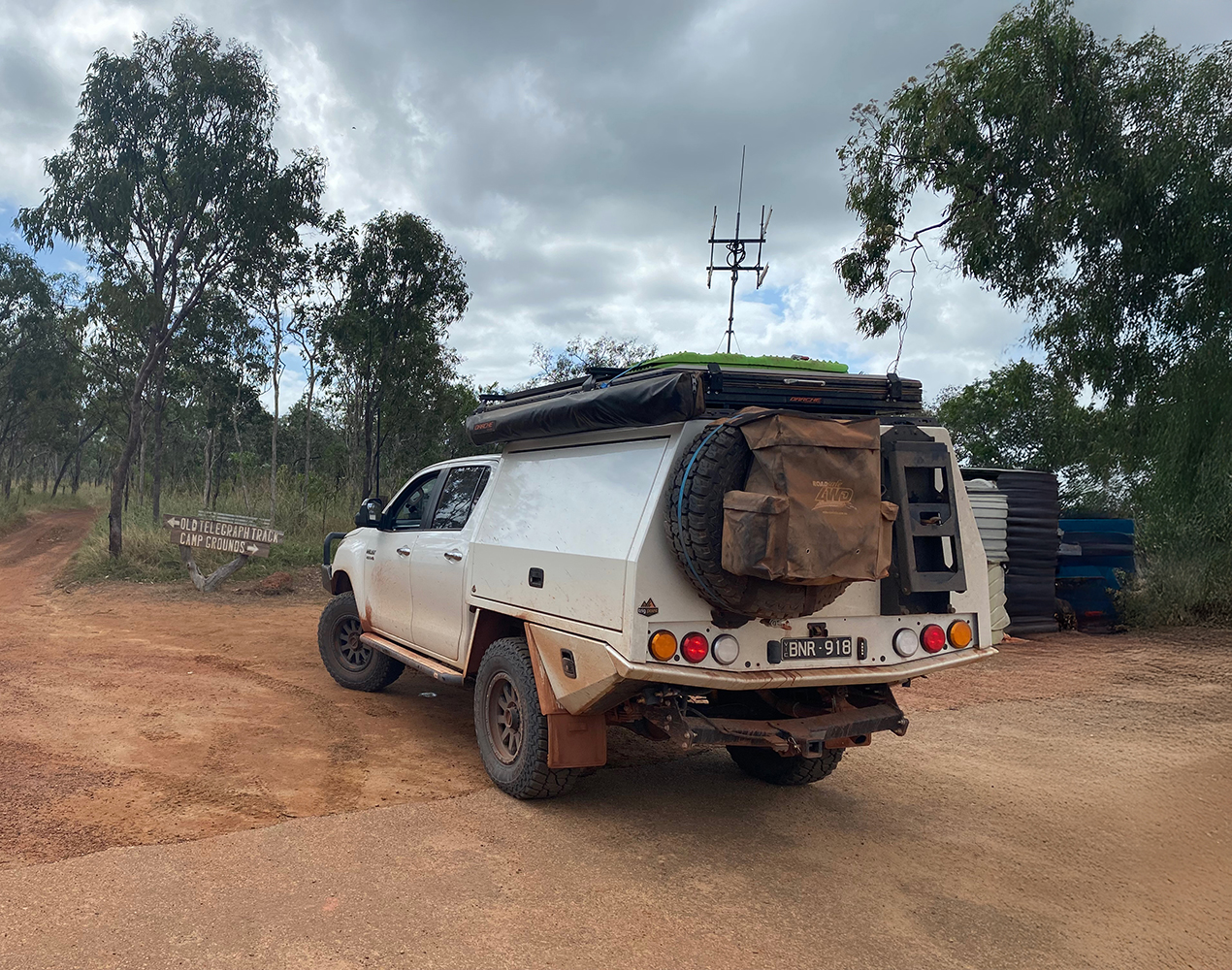
Start by deciding whether the HiLux still needs to function as an open tray. That choice sets the direction for the rest of the build.
| Setup | Best For | Key Advantage |
| Chassis-Mount Canopy | Permanent trade, touring or hybrid builds | Low floor and no separate tray required |
| Horizon Tray + Canopy | Changing loads and mixed-use builds | Retains tray flexibility and removable canopy options |
A chassis-mount canopy attaches directly to the vehicle chassis, keeping the floor low and removing the need for a separate tray.
It suits HiLux owners who expect the canopy to stay on the vehicle. Trig Point chassis-mount canopies provide large gullwing access, central locking, slam-shut doors and a 300kg dynamic roof load rating.
For touring, trade or dual-purpose builds that don’t need regular open tray space, it’s a straightforward starting point.
A Horizon tray and tray-mount canopy keeps more flexibility in the vehicle. The HiLux Horizon Tray uses removable tray sides, recessed tie-down tracks and underbody storage, with vehicle-specific tech relocation available where required. Confirm current fitment and availability for the exact N80 cab type, particularly Extra Cab builds.
The Horizon canopy mounts through Trig Point’s Track side system, overlapping the tray sides to create a low, flush floor and stable fit. The canopy can also be removed when the full tray is needed.
This setup suits changing work loads, shorter canopies with usable tray space behind them, and hybrid builds that move between work and touring.

Payload can narrow quickly once a HiLux is fitted out. Count the tray or canopy alongside bull bars, tow bars, drawers, batteries, water, fridge, roof equipment, spare wheels, tools, passengers and towball download.
Start with the GVM and axle limits that apply to the exact HiLux variant, then work from the vehicle’s real weight once permanent accessories are fitted. The available payload needs to cover the complete working or touring load, including the canopy and everything carried with it.
The practical consequence is straightforward. A 75L water tank carries about 75kg of water before the tank, pump and plumbing are counted. Add an upright fridge, battery, inverter, drawers, rooftop tent, awning and recovery equipment and a healthy-looking payload figure can narrow quickly.
Keep heavy equipment low and forward where possible, then check the finished vehicle in its heaviest normal work or touring condition.
Lock in the fixed equipment before cabinetry:
Trig Point chassis-mount canopies have a 300kg dynamic roof load rating. Horizon tray-mount canopies have a 200kg dynamic rating. Those figures describe the canopy structure. Vehicle payload, axle limits, mounting and handling still determine what makes sense on the finished HiLux.
The best canopy for a HiLux comes down to what needs to stay onboard, what changes through the week and how often you need open tray space.
A HiLux canopy for tradies needs to make the working day quicker. Tools used several times a day should be near the doors. Heavy cases belong low. Small fixings and consumables need shelving or drawers that stop them disappearing behind larger gear.
Central locking and slam-shut doors make repeated access easier between jobs. Plan lighting and 12V power early as well, so tool charging, work lights or a compressor have a defined place in the fit-out.
Keep some open space if the load changes. A plumber carrying a drain machine or a technician moving bulky cases will get more value from a clear bay than another bank of permanent drawers.
On an N80, canopy length matters too. A shorter Horizon canopy can preserve usable tray space behind the canopy for materials or awkward gear. A longer canopy gives you more enclosed storage. If ladders or materials regularly need an open tray, the Horizon tray and canopy path keeps that capability in the build.
A HiLux touring setup works best when the equipment used every day on the road is easy to reach. Fridge access, water, charging, recovery gear and camp lighting should be planned before the storage layout becomes fixed.
An upright fridge near the main access door works well for roadside stops because food and drinks can be reached without pulling tubs out first. Under-canopy water storage leaves more usable room inside. Size the battery and inverter for the loads that may run together when the vehicle is parked.
Shannon’s Trig Point N80 HiLux shows how those systems can work in one touring build. It uses an 80L Dometic upright fridge, 100Ah lithium battery, 300W inverter, solar panels, internal drawer and table, 75L water tank and creek drawer kit. The rear wall carries a double jerry can holder and ladder, with a 180-degree awning and different rooftop tents used over time.
With the fixed touring equipment in defined positions, the remaining canopy space stays available for food, recovery equipment, bags and trip-specific gear.
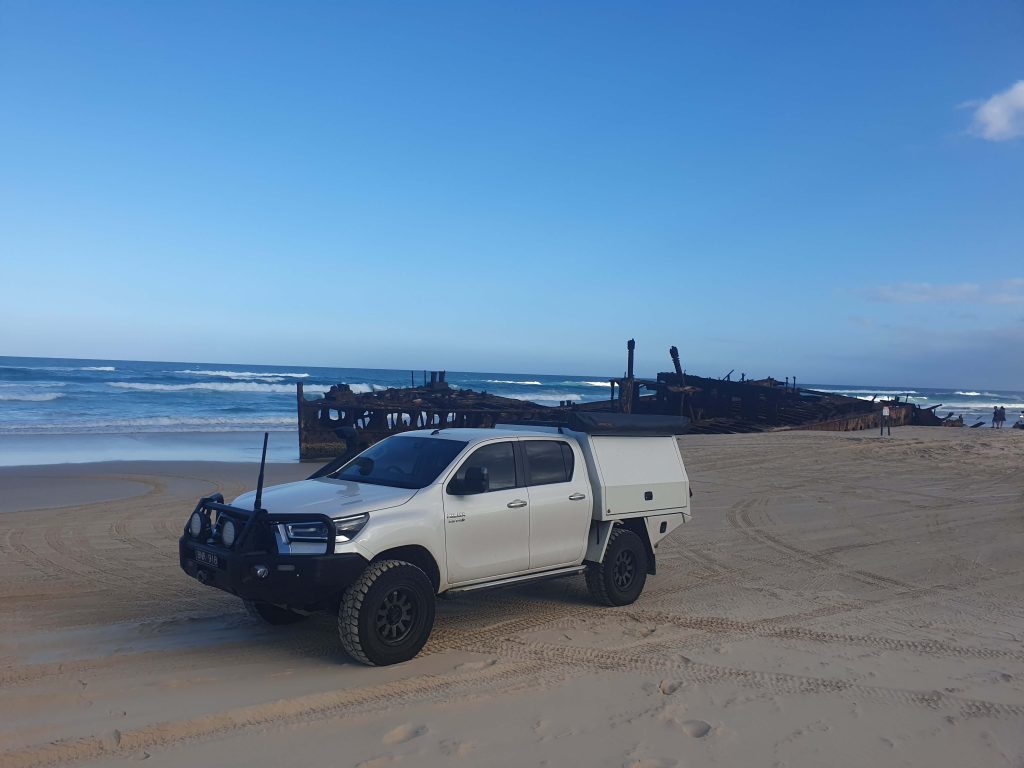
A hybrid HiLux needs a layout that can change without requiring a full unload every Friday afternoon. Start by separating permanent equipment from swap-over gear.
Keep shared equipment such as the battery system, compressor, lighting, water and recovery gear in fixed positions. Tool cases, parts tubs, camp kitchen boxes and travel bags can then share an open bay at different times of the week.
Leave useful open space until the vehicle’s routine is clear. Internal shelves, drawers, dividers and kitchens can be added later. Plan underbody water tanks and trundle drawers earlier because retrofitting them generally takes more labour and time.
For regular work and touring use, the Horizon system can preserve tray space behind a shorter canopy, allow tool-free tray side removal and return the ute to a full tray when the canopy comes off.
When comparing HiLux canopy options in Australia, assess the completed build. Fitment, vehicle technology, water, electrical, storage and roof equipment all affect how the finished HiLux works.
An integrated N80 build starts with vehicle-specific fitment, then plans camera, radar and sensor relocation where required, water and electrical positions before cabinetry, and roof accessories before load and mounting decisions are locked in. That sequence reduces the chance of a fridge blocking a drawer, wiring consuming planned storage space or an underbody accessory becoming difficult to add later.
Trig Point’s HiLux build shows how those decisions can come together in one vehicle. The HiLux canopy and tray ranges can then be configured around cab type, regular load, fixed equipment and required tray flexibility.
Choose a chassis-mount canopy when the HiLux will remain permanently enclosed. Choose a Horizon tray and canopy when open tray use, removable sides or changing loads are part of the plan.
Explore the Trig Point HiLux build, HiLux canopies and HiLux trays. You can contact Trig Point to discuss configuring a build around your cab type, regular load and planned equipment.
The best canopy depends on how the HiLux is used. A chassis-mount canopy suits a permanent enclosed setup with a low floor and no separate tray underneath. A Horizon tray and canopy suits owners who still need tray space, removable sides or the ability to remove the canopy.
No. A chassis-mount canopy fits directly to the chassis and doesn’t need a tray. Choose a tray-mount canopy when open tray capability and a more modular load area are useful parts of the vehicle’s normal work or travel.
Both can support a serious HiLux touring setup. A chassis-mount canopy suits a permanent enclosed build and has a lower floor. A Horizon tray-mount canopy suits touring storage with tray functionality and the option to remove the canopy.
Yes. Keep shared equipment such as water, power and recovery gear in fixed positions, then leave an open bay for the tools, cases, tubs or travel gear that changes. This reduces the amount of equipment that needs to be reorganised between workdays and trips.
Payload varies by model, cab type, drivetrain and vehicle specification. Check the GVM and payload for the exact HiLux, then include the tray or canopy, permanent accessories, passengers, fuel, water, batteries, fridge, tools, roof gear and towing load before finalising the build.
Yes, subject to the complete vehicle and mounting setup. Trig Point chassis-mount canopies have a 300kg dynamic roof load rating and Horizon tray-mount canopies have a 200kg dynamic rating. The rooftop tent, crossbars, awning, solar and anything else carried above the canopy also count toward vehicle payload and affect the centre of gravity.